Can Suede Trainers Get Wet, or Do You Need to Avoid Rain Altogether?
As an Amazon Associate we earn from qualifying purchases. This page contains affiliate links — if you buy through them, we earn a small commission at no extra cost to you.
Everything about keeping suede trainers looking good in the rain comes down to the first hour after they get wet. Get that hour right – drying them slowly, stuffing them properly – and the rain itself barely matters. Get it wrong with heat or haste, and you’ll see permanent texture changes. This guide covers how to handle that critical drying window and when a protector spray makes sense for your routine.
The honest answer is that suede trainers can handle getting wet — once or twice, if you dry them properly. What they can’t handle is repeated soaking without any care, because water causes the nap to flatten and harden in a way that changes the texture permanently. The “never let suede get wet” advice floating around online isn’t wrong, but it’s written for someone who lives somewhere dry, not the UK. Many parts of Britain see rain on 150-200 days each year according to Met Office data, making complete avoidance impractical for daily wear.
What actually matters is knowing how to rescue a wet pair of suedes, when to reach for a protector spray, and why the middle option — just hoping for the best — is the one that causes the most damage long-term.
How to Rescue Suede Trainers from Rain
When suede gets wet, the nap (those tiny raised fibres that give suede its characteristic texture and look) mats down and can stiffen as the water evaporates. That’s the mechanism. It’s not that water itself ruins suede — it’s what happens when it dries too fast or without support. Heat makes this significantly worse, which is why sticking wet suede near a radiator or using a hairdryer is the most common mistake owners make.
The fix is straightforward, even if it’s a bit of a faff.
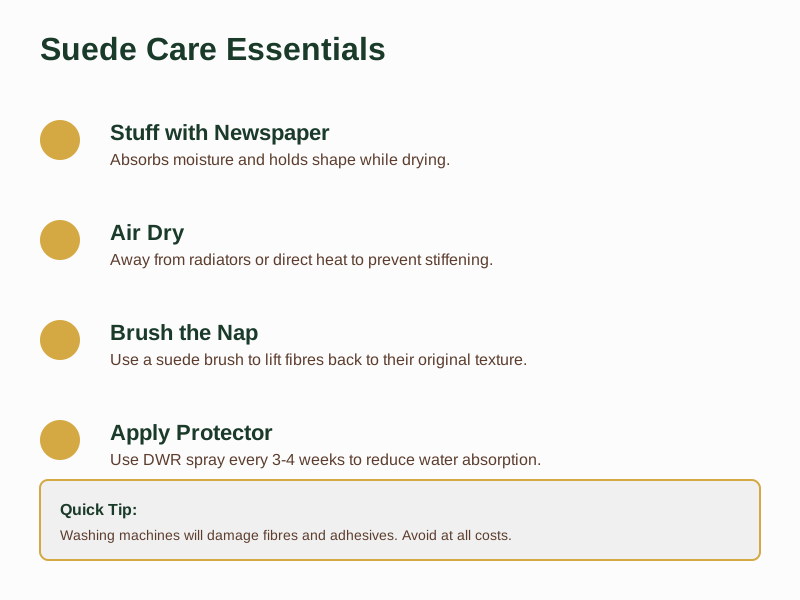
First, stuff the trainers with newspaper. This does two things: it absorbs moisture from the inside and it helps the shoe hold its shape as it dries. Crumpled newspaper works better than folded sheets because it has more surface area making contact with the damp leather. You want the paper inside the shoe, not wrapped around the outside.
Second, leave them somewhere with decent air circulation but away from direct heat. A hallway, a spare room, somewhere not cold but not warm either. The drying time depends on how soaked they got, but you’re typically looking at overnight to a full day for a proper soak. Rushing this step is where most people undo their own good work.
Once they’re completely dry, take a suede brush and brush the nap back up. The fibres will re-lift — that’s the thing about suede, it has memory. Brush firmly but not aggressively, following the direction of the nap. If there are any compressed areas, brush those at a slightly different angle to work the fibres back up from the root.
One thing to know: if the trainers picked up mud, let the mud dry completely before you brush. Trying to brush wet mud into suede pushes it deeper into the fibres and can leave a stain that wasn’t there before. Let it dry, then brush it off once it’s solid.
This rescue method works. A pair that looks ruined straight after a downpour usually isn’t — a proper dry-and-brush brings the nap back to normal. The catch is that each wetting cycle does a little bit of cumulative wear on the nap texture — not ruinous on its own, but noticeable over months of frequent rain exposure.
Is Avoiding Rain Practical for UK Wear?
This is the advice you’ll get from most shoe shops and care product sites: keep suede away from water. And technically, they’re right. If suede never gets wet, the nap never mats, the texture stays pristine, and you never need to rescue anything.
The problem is that according to Met Office statistics, many UK regions experience rain on around 150-200 days annually. That’s not a number anyone checks in the moment — it’s something you feel when you’re deciding whether to wear your grey suede trainers for the third time in a week and the forecast says “light showers”. Avoiding rain as a suede care strategy means either owning enough alternate shoes that you can always dodge the forecast, or accepting that your suede trainers become weekend-only shoes for dry weather.
The people who follow this advice most strictly tend to report that they barely wear their suede trainers. They look after them meticulously, and the shoes stay in excellent condition — in the cupboard. That’s not a care strategy, it’s a different product. If you’ve spent £90 on trainers you’re treating like museum pieces, you’ve bought the wrong shoe for your life.
What this approach genuinely wins on is avoiding salt stains from gritted roads in winter. Road salt can leave white marks that are more visible than water darkening, and salt has abrasive qualities. If you’re commuting through a treated road in frosty weather, the rain-avoidance approach does protect against that specific problem. But for most days of the year, it’s overcaution for many lifestyles.
The honest answer is that “never get suede wet” is sound advice for fine suede dress shoes you’ll wear to special occasions. It’s overkill for trainers you want to actually wear.
Why DWR Protection Makes Sense
Durable Water Repellency — DWR — is the practical answer to the whole problem. A protector spray creates a barrier on the surface of the suede that causes water to bead and run off rather than soaking into the fibres. It doesn’t make suede waterproof (that’s a different claim, and one no spray legitimately makes for suede), but it dramatically reduces how much water actually gets into the nap in the first place.
This matters because the rescue method works best as a one-off. The more times suede gets soaked and dried, the more cumulative wear you get on the nap texture — each cycle flattens it a fraction more. A DWR protector reduces the frequency with which that cycle happens, which means the fibres stay in better condition over time.
A protector spray’s beading behaviour typically holds up through everyday wear and light rain. The treatment will eventually wear off and need renewing, typically after several weeks of regular use or following a deep clean that strips the coating. Nikwax Nubuck & Suede Proof (paid link) is a standard choice in this space — it applies as an aerosol, works on nubuck and suede, and the brand’s guidance is that it maintains breathability while adding water repellency, which matters because one of the things suede owners worry about is that a coating might make the material less comfortable to wear. It doesn’t change the feel of the shoe noticeably.
See Nikwax Nubuck & Suede Proof on Amazon → (paid link)
Grangers Footwear Repel Plus (paid link) works on similar principles and is a reliable option for boots and everyday shoes alike. The trade-off is that neither product is cheap, and neither lasts forever — reapplication is part of the routine. But compared to the cost of replacing trainers that have gone to pot because the nap has permanently flattened, the annual spend on a bottle of spray is a false economy in the other direction.
See Grangers Footwear Repel Plus on Amazon → (paid link)
The missing step that most protector guides skip is prep: the spray works better on clean suede. If you apply it over a layer of grime, you’re coating the dirt rather than the leather. A quick brush-down first — and for anything more embedded, one of the suede eraser blocks you can pick up for a few pounds — means the spray actually contacts the fibres it’s meant to protect.
If you’re going to use a protector, apply it before the first wear. That way the spray protects from the start rather than trying to rescue an already-marked shoe.
A bottle of protector spray covers several pairs and lasts through regular wear. That’s a fraction of what a new pair of trainers costs, and it buys you actual wear rather than worry.
Matching the Approach to Your Routine
There’s no single right answer here, and anyone who tells you there is probably has something to sell. The right choice depends on how often your suede trainers are going to encounter rain.
Occasional rain — infrequent exposure, maybe once or twice a month — and you’re fine with the rescue method. Stuff with newspaper, dry naturally, brush the nap back up. It works, and it doesn’t require buying anything beyond a suede brush. You’ll get some cumulative wear on the nap over the years, but for light occasional exposure, it’s not significant.
Frequent rain — wearing trainers several times a week through autumn and winter when pavements are often wet — the protector spray is the move. It prevents the damage from happening rather than fixing it after the fact, and for this level of exposure, the rescue method starts to feel like you’re fighting the same battle regularly.
High-value shoes — expensive pairs or those you want to keep looking fresh for specific reasons — the protector is worth the routine as a form of insurance.
On a tight budget — the protector still makes economic sense over time, but if you can’t stretch to it immediately, the rescue method will suffice. Just accept that the nap texture will gradually change, and consider a spray when funds allow. The trainers won’t be ruined, they’ll just show more wear.
The “avoid rain” approach only makes sense if you’re genuinely going to stick to it. Most people won’t. They start out careful, then one rainy Tuesday they need their trainers and off they go, soaking wet, stuffed with newspaper that they’ve improvised from a crumpled receipt because they didn’t plan ahead. That’s when the damage happens — not from the rain, but from the panic-dried trainers and the brush used too hard on still-damp fibres. A protector removes the panic. You get caught in a shower, you dry them normally, the spray did its job, you carry on.
The next time rain is forecast, do two things the night before: check your protector still beads water by testing a small spot, and decide exactly where the trainers will dry if they do get wet — somewhere airy but not warm. Preparation decides the outcome before the rain arrives. Now you know what you’re working with — get the free suede and leather care checklist to keep your trainers in better shape with minimal effort.
Suede Care Options: Rescue vs Protection
| Option | Best For | Key Action | Cost Consideration |
|---|---|---|---|
| Rescue Method | Occasional rain (infrequent exposure) | Stuff with newspaper, air dry, brush nap | Low (requires brush only) |
| Protector Spray | Frequent rain (regular wear) | Apply DWR spray before first wear | Moderate (covers several pairs) |
| Avoid Rain | High-value shoes or dry climates | Keep shoes in cupboard | High (limited wear, risk of damage) |
| Washing Machine | Never | N/A | High (damages fibres and adhesives) |
Common Questions About Wet Suede
Can I put suede trainers in the washing machine?
No. A washing machine will saturate the suede far more than rain ever would, and the agitation damages the fibres in a way that can’t be brushed back. Hand cleaning with a suede-safe cleaner, or a dry suede eraser for light marks, is the route to go — and if the uppers are genuinely saturated, treat them the same way as rain-soaked: newspaper, air dry, brush.
How often should I reapply a protector spray?
Reapply when water stops beading on the surface, which typically happens after several weeks of regular wear. If you’ve cleaned the shoes deeply — with a suede shampoo or a soaking wet clean — you’ll need to reapply after they’ve dried, because the cleaning process will have stripped the previous coating.
Does a protector spray make suede waterproof?
No. It gives the suede Durable Water Repellency — DWR — which causes water to bead and run off the surface rather than soaking into the fibres. That’s very different from waterproof. You can still get the shoes wet through heavy or sustained exposure, or if water pools on them for any length of time. The spray buys you time and reduces the impact of rain; it doesn’t turn suede into rubber.
The honest answer is that suede and water are an uneasy pair — but uneasy doesn’t mean incompatible. The difference between trainers that look worn after a wet winter and trainers that bounce back comes down to drying them properly when they do get soaked, and using a protector spray if rain is a regular occurrence rather than a rarity.
Related Guides
For a complete overview, see our How to Clean Suede Trainers at Home Without Ruining Them .
Sources & Further Reading
As an Amazon Associate we earn from qualifying purchases. The products linked above are ones we recommend based on independent research and owner feedback.
Note: General guidance only, verify details with a qualified professional or official source.