How to Store Leather Bags and Jackets So They Don't Crack
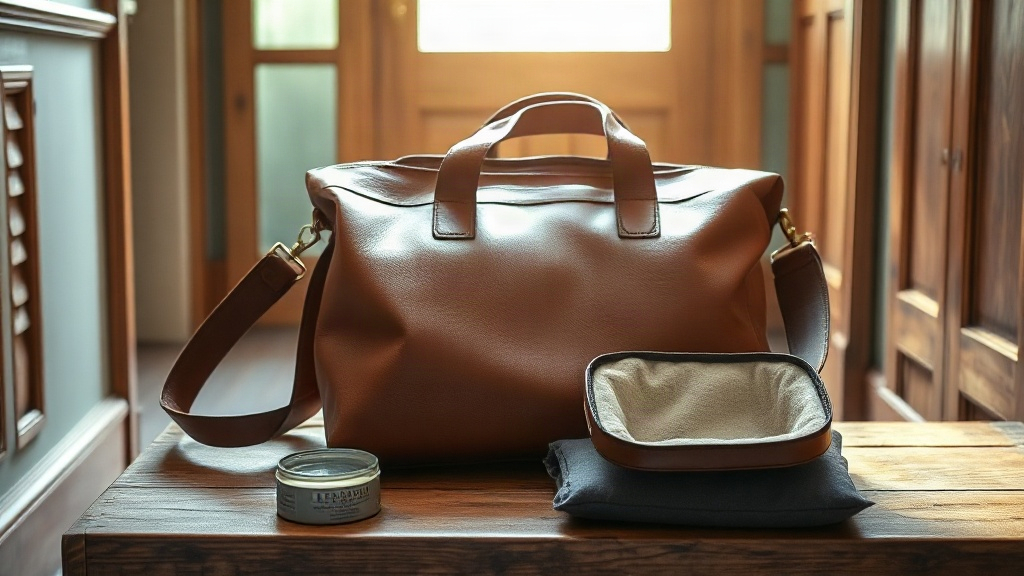
Store leather between 15-21°C with humidity around 40-50%, and keep it out of direct sunlight. These are the environmental parameters your storage space should meet to prevent leather from cracking over time.
As an Amazon Associate we earn from qualifying purchases. Some links on this page are affiliate links, which means we may earn a small commission if you make a purchase.
Cracked leather looks worse than it is. The damage is usually irreversible, but the panic is usually avoidable. The cracking on the corner of a leather bag or the shoulder crease in a jacket often stems from preventable causes like moisture-trapping storage or lack of structural support. Neither of those is mysterious. Neither requires a specialist product.
Setting up proper storage requires minimal time and expense. What’s needed is a dust bag, a padded hanger, and a clear understanding of why plastic is the enemy. Here’s the full picture.
Why Breathable Storage Matters
Leather is skin. It was alive once, and it still behaves like it — maintaining a moisture balance with the air around it, drawing in small amounts of hydration from humidity and releasing excess when things are too damp. That process is what keeps it supple. Seal leather inside an airtight container, and you’ve cut it off from the air. Moisture that would normally evaporate gets trapped. The leather sits in its own humid microclimate, which can dry it out from within. The surface starts to look dull, then tight, then cracks appear.
Think of it like a wet towel left knotted inside a sealed plastic bag. It won’t dry. It goes musty, then brittle. Leather works the same way. The fix is simple: always store leather in breathable materials — a cotton dust bag, a linen cover, or simply on an open shelf with room to breathe. Never reach for the plastic garment bag.
If you’re putting your leather away for the season, give it that breathing room. A dust bag is the standard approach — it keeps dust off while allowing airflow. If you don’t have a dust bag, a clean cotton pillowcase works in a pinch. What matters is that air can move through the fabric.
Common Storage Mistakes and Their Fixes
Most of what goes wrong with stored leather falls into two categories: moisture trapping and shape distortion. Both are preventable with the right kit.
Plastic garment bags are the most common culprit. Tight-fitting, non-breathable, and often used because they feel like protection. They’re not. Any bag sealed in plastic is slowly losing the moisture balance that keeps it supple. If you’ve ever opened a leather bag after months in a plastic cover and found it looking duller and stiffer than when you put it away — that’s the mechanism at work. Swap the plastic for a fabric dust bag, or store the item openly in a wardrobe with decent airflow.
Wire hangers concentrate the weight of a leather jacket across two very narrow points — exactly where the shoulders sit. Leather is flexible, but it’s also heavy when you’re talking about a full-length or lined jacket. Wire hangers don’t give. Over months, the leather stretches around those two points, and the shoulder shape distorts permanently. It won’t bounce back. A padded hanger — broad-shouldered, covered in velvet or felt — distributes that weight across a wider surface. The jacket keeps its shape. The cost difference is a few pounds, and the hanger will outlast most of the wardrobe.
Folding leather bags flat against themselves is another slow-motion mistake. When leather folds in the same direction repeatedly, the creases deepen and the grain compresses. Over time those creases become permanent. For bags, the answer is to stuff them before storing — but what you stuff them with matters.
For bags, the right approach is stuffing with acid-free tissue paper, not newspaper. Newspaper ink can transfer onto light-coloured leather. Acid-free tissue is cheap, widely available, and does the job of holding the bag’s shape without the risk. Stuff the bag lightly — enough to keep the sides from caving in, not so much that it stretches the leather.
Use the checklist to audit your current setup — Get the Free Suede & Leather Care Checklist .
Choosing the Right Storage Location
Breathable storage solves the immediate problem. But where you put that breathable bag or jacket matters just as much.
Temperature should be cool and consistent. Attics are a bad choice — they swing between cold and baking hot with the seasons. Basements tend to be damp. Near a radiator is one of the worst spots in a UK home, particularly in a flat with central heating that runs hard in winter. Heat can dry leather out over time. It’s slow-acting, which is why people don’t connect the crackling they find six months later with the radiator two metres away. A bedroom wardrobe or a cupboard in a hall is typically the most stable environment.
Humidity is the trickier variable in the UK. Too dry and leather cracks. Too damp and you get mould — particularly in sealed wardrobes or rooms that don’t get much airflow. The target is moderate, stable humidity. If your home is particularly damp, a small silica gel packet inside the wardrobe alongside your leather items can help manage excess moisture without sealing anything in. Don’t put silica directly against the leather — just somewhere nearby in the same enclosed space.
Light fades leather, particularly lighter shades. UV exposure causes fading and surface damage over time. Dark or low-light storage is the goal. If your wardrobe has glass doors, keep the leather items toward the back, away from direct sunlight, or use the inner shelf rather than the door.
The summary is this: a cool, dark, dry corner of a well-ventilated wardrobe. Not the top shelf of an airing cupboard. Not a plastic box under the bed. Not the radiator alcove.
Getting Leather Ready for Storage
Storing clean, conditioned leather is different from storing it dirty. Dirt and skin oils left on the surface don’t just sit there — they oxidise over time, particularly if there’s any residual moisture. On pale leather, that can translate into permanent staining. On any leather, it’s a layer of grime sealed against the surface for months.
The steps before storage are simple. Clean the surface with a damp cloth — no product needed if it’s not grimy — and let it dry completely. Condition lightly with a leather conditioner, applied sparingly and buffed to an even finish. The conditioner replaces oils the leather loses through wear and helps maintain suppleness during storage. If you want a specific recommendation, a budget-friendly option like Renapur Leather Balsam (paid link) does this job well — it absorbs without leaving a heavy sheen, which suits leather that’s about to sit unused for a while. The premium alternative (Saphir Renovateur (paid link)) offers a finer finish but comes at a higher price; on stored items you’re not displaying, the extra spend doesn’t add much.
View Saphir Renovateur on Amazon → (paid link)
See Renapur Leather Balsam on Amazon → (paid link)
Let the leather dry fully after conditioning before putting it away. Even a small amount of moisture trapped inside a bag or under a jacket’s lining is enough to cause mould. Check seams, pockets, and the inside of the lining — anywhere that might hold damp. If in doubt, leave it out overnight on a surface with airflow before packing it away.
Your Storage Questions Answered
Can I put my leather jacket in a vacuum bag?
No. Vacuum bags compress the leather, which causes deep creasing that won’t come out, and they remove air entirely — eliminating the breathability the leather needs. You’ll come back to a flat, distorted jacket with permanent fold lines. If space is genuinely tight, use a breathable garment bag instead.
Should I stuff my leather bag with newspaper?
No. Newspaper ink transfers, and the paper may have acidity that affects leather surfaces. Acid-free tissue paper is the right choice — it’s neutral, holds its shape, and won’t leave marks. A crumpled tissue loosely packed inside the bag is enough.
Is it okay to store leather in a wardrobe with cedar blocks?
Yes — cedar blocks are excellent for repelling moths and adding a mild, pleasant scent. Just make sure the leather isn’t in direct contact with the wood, and that it’s still in a breathable fabric bag or cover. Cedar is doing its job in the wardrobe; the leather just needs its own separate breathing space.
How often should I check stored leather?
Periodic checks are a sensible practice. Open the dust bags, check for any signs of mould, and give the leather a brief airing. If the humidity in your home fluctuates a lot through the seasons, check more often — particularly at the transition between heating season and summer, when condensation inside wardrobes is most likely.
Essential Storage Equipment
| Item | Purpose | Recommended Material |
|---|---|---|
| Dust Bag | Keeps dust off while allowing airflow | Cotton or linen |
| Hanger | Distributes weight to prevent shoulder distortion | Padded, velvet or felt |
| Stuffing | Holds bag shape without damaging the leather | Acid-free tissue paper |
| Environment | Prevents moisture trapping and fibre breakdown | Cool, dark, dry corner |
| Protection | Helps maintain suppleness during storage | Leather conditioner |
| Monitoring | Allows early detection of mould or stiffness | Regular visual checks |
Before You Put It Away: The Final Checks
Don’t skip the preparation — clean, condition, and stuff or hang properly before storage. Missing any one of these steps can undermine the benefit of getting the storage conditions right.
First, clean the leather thoroughly with a damp cloth to remove surface dirt. Next, apply a light conditioner to replenish natural oils and maintain flexibility. Finally, ensure proper support: stuff bags with acid-free tissue to maintain their shape, or hang jackets on padded hangers to prevent shoulder distortion. Only then is your leather ready for the cool, dark, breathable storage space you’ve prepared.
Following this sequence ensures your leather items emerge from storage looking as good as when you put them away. For more detailed guidance on leather maintenance, see our Leather Bag and Jacket Care: How to Keep Them from Cracking or Drying Out .
Related Guides
- How to Condition a Leather Bag Without Darkening It
- Leather Jacket Gone Stiff or Dry: What Actually Brings It Back
Sources & Further Reading
As an Amazon Associate we earn from qualifying purchases. The products linked above are ones we recommend based on independent research and owner feedback.
Note: General guidance only, verify details with a qualified professional or official source.