How to Stop Leather Shoes Cracking at the Crease
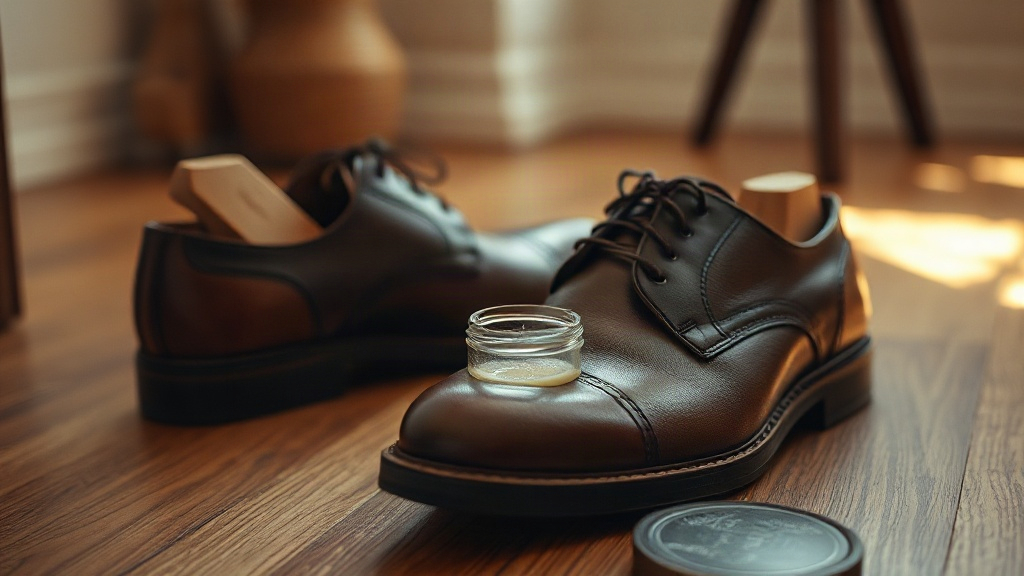
The difference between shoes that crack at the crease and those that don’t is usually a five-minute habit after each wear, not an expensive product. That habit—inserting shoe trees—sits at the heart of what follows.
You bought a pair of leather boots or dress shoes, and a few months in, the crease across the vamp has deepened into something that looks less like wear and more like damage. The fear kicks in fast—is this just what leather does, or have you somehow ruined them already?
Cracking at the crease is not inevitable, and it is not your fault for walking. Most advice tells you to condition more, but conditioning is the secondary fix. The primary one barely gets a mention in most shoe-care guides. Here is what it is and why it matters more than any cream or polish.
Understanding the creasing process
Leather is made of fibres. When you walk, the leather flexes at the ball of the foot—that bend is the crease. A crease is normal. The fibres compress and relax with every step, and with healthy, moisturised leather, they handle it.
The problem comes when those fibres are compressed repeatedly while dry. Think of it like a paperclip: bend it back and forth enough times and it snaps. Leather behaves the same way. Dry leather fibres lose their flexibility, and under repeated compression they fracture. The visible result is a crack, not just a fold—and once a fibre has snapped, no product on earth repairs it.
Don’t panic if you see creases. They are not a defect. The distinction that matters is this: a crease is a fold in the leather; a crack is a break in a fibre. Conditioning can help prevent new cracks, but it cannot fix existing ones.
For more on what leather needs day to day, our leather shoe and boot care guide explains the material in plain terms.
Why shoe trees are essential
Insert shoe trees immediately after wearing. Not tomorrow morning. Not when you get home from work. Straight away, while the leather is still warm and damp from your foot.
Shoe trees hold the fibre structure open during drying. When leather dries without support, the fibres compress into the crease and set in that position. Over time, the compression becomes permanent and the fibres weaken at exactly the stress point. Shoe trees can help prevent deep creasing. The leather dries in its original shape, the fibres stay open, and the crease remains a crease rather than progressing to a crack.
They also absorb moisture and oil from the lining—the stuff your foot leaves behind every time you wear them. That moisture is what dries leather out if left alone, and dried leather cracks faster. A cedar shoe tree handles both jobs at once: shape and moisture.
Shoe-care professionals often recommend them because keeping the fibre structure open every single wear helps stop a crease turning into a crack over months of use. Skip it occasionally and the shoe still creases normally; skip it every wear and the compression has nothing to correct it before the next time you put the shoes on.
You can find affordable options that last for years, and one set works across multiple pairs if you swap them between wears, which keeps the per-wear cost negligible.
Conditioning’s supporting role
Now the part that most articles lead with—conditioning.
Conditioning is worth doing. It replenishes the natural oils in leather and keeps it supple. A well-conditioned pair of leather shoes resists cracking better than a dry one.
What conditioning cannot do is fix a crease that has already turned into a crack. Once the fibres have snapped, no amount of cream restores them. Conditioning is preventative, not corrective.
There is a second issue that doesn’t get mentioned enough: over-conditioning. Too much conditioner softens the leather, which sounds helpful but actually increases how much it creases. Soft leather folds more deeply under pressure, putting more stress on the fibres at the bend. Conditioning makes leather more flexible full stop — that’s useful for suppleness, but on a shoe that doesn’t fit well to begin with, more flexibility just means deeper, more frequent creasing at the same stress point.
The right approach is little and often, not dousing. Many care guides suggest conditioning every few months for typical use. Weekly conditioning is likely excessive for most situations.
For the practical side of what to use, see our guide to leather cream versus wax polish .
How fit affects crease depth
If your shoes are too large, they crack faster. This is not about quality—it is about geometry.
Oversized shoes create excessive creasing because your foot shifts forward with each step, forcing the leather to fold deeper than it would in a well-fitting pair. More fold means more compression at the stress point, which means fibres break faster.
The fix is straightforward. Check whether your shoes are too big: does your heel slip when you walk? Do your toes hit the front of the shoe when you are standing still? If either answer is yes, the fit is probably contributing to the cracking.
Insoles and heel grips reduce the internal volume, which reduces the forward shift and the depth of the crease. This is a cheap fix that directly addresses the mechanical cause — correcting the fit reduces the fold depth at the vamp, and less fold depth means less stress on the fibres every single step.
These adjustments are often used to improve the fit of shoes that are slightly too big.
Common questions answered
Can you fix cracked leather at the crease?
No. Once the fibres have snapped, the crack is permanent. What you can do is stop it getting worse—use shoe trees to prevent further compression, condition to keep the surrounding leather supple, and address the fit to reduce stress on the area. A cobbler may be able to fill or smooth the crack cosmetically, but the underlying fibre damage cannot be reversed.
Do shoe trees really make a difference?
Yes. Every time you wear leather shoes, the leather flexes and holds moisture from your foot. Without a shoe tree, the leather dries compressed into the crease—and over time, that compression becomes permanent. Shoe trees prevent this by holding the shape during drying. The difference in how shoes age with consistent use is noticeable.
Is it normal for leather shoes to crease?
Yes. Creasing is a natural consequence of leather flexing. A crease is not damage—it is the normal behaviour of the material under pressure. Cracking is the damage. The goal is to keep the crease as just a crease, not to prevent flexing entirely.
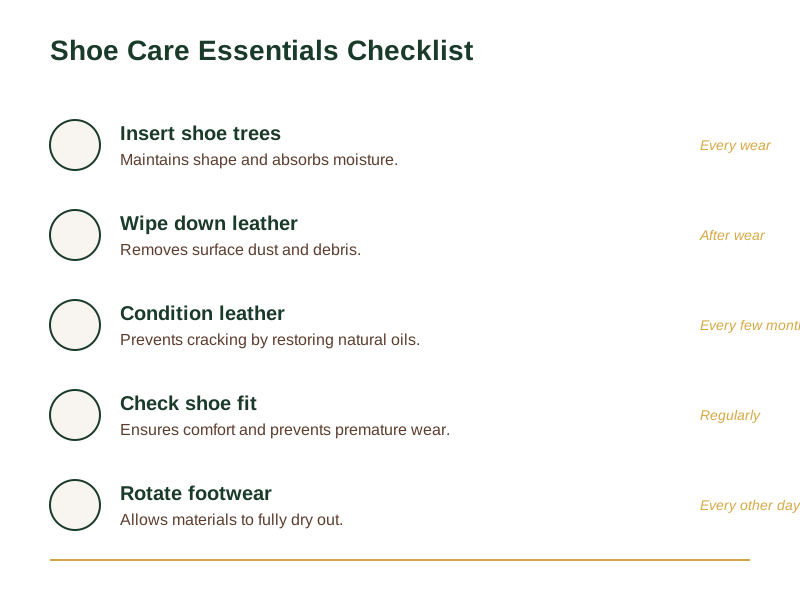
The essential care steps are to insert shoe trees after every wear, wipe down the leather, condition it every few months, regularly check the shoe fit, and rotate your footwear every other day.
Crease severity and prevention
Creases develop through three observable stages. In the first stage, you see only a surface fold that disappears when the shoe is not being worn—this is completely normal and reversible with basic care. The second stage shows a permanent crease line, but the leather remains intact; at this point, consistent shoe tree use can prevent progression. The third stage involves visible cracking where fibres have broken; this damage is permanent, though further deterioration can be halted.
The short version is this: use shoe trees every time you take off your shoes, condition occasionally to keep the leather supple, and make sure your shoes actually fit. Crack prevention is mostly one habit—inserting shoe trees—done consistently. The rest is maintenance that supports it.
Once you know what the actual cause is, the solution is straightforward. If you want a simple checklist to work through every time you take off your shoes, we have put one together.
Get the Free Suede & Leather Care Checklist
Related Guides
For more detail on prevention and care, see our Leather Shoe and Boot Care UK: Conditioning, Polishing and Waterproofing .
Note: General guidance only, verify details with a qualified professional or official source.