How to Get Rid of Scuff Marks on Suede Without a Proper Eraser
As an Amazon Associate we earn from qualifying purchases. Some links on this page are affiliate links, which means we may earn a small commission if you make a purchase.
For a quick scuff on suede, the safest and most effective household substitutes are, in order: a clean white vinyl pencil eraser, a dry suede brush, or a soft-bristled toothbrush. Each works by physically lifting the flattened fibres without moisture, which is the key to avoiding permanent damage. Anything involving water, soap, or coloured materials carries a high risk of making the mark worse.
You’ve just noticed a dark grey streak across your otherwise pristine white suede trainers. It happened walking past a rough wall or catching the kerb—the kind of mark that looks catastrophic but is actually just the nap of the suede flattened and trapping dirt. It’s fixable, but only if you reach for the right tool.
A dedicated suede eraser is the most effective option, though you might not want to buy a specialist tool for occasional use. That’s a fair position, and there are workarounds—with important caveats. Here’s how suede scuffs work, which tools earn their place, and which shortcuts are safe to take.
How Scuff Marks Work and Why Moisture Fails
Suede isn’t leather in the traditional sense. It’s the underside of hide—the fibrous, raised nap that gives suede its distinctive velvety texture. When something drags or presses against it, the fibres flatten in one direction. That compressed patch traps dust and dirt differently to the surrounding material, which is why a scuff looks darker.
The reason scuffs are harder to fix than surface dirt comes down to this: flattening the nap changes how light reflects off the surface. A brush alone redistributes loose dirt but rarely redistributes fibres. That’s why brushing a scuff sometimes makes it look worse before it looks better—you’re moving the grime around in a flattened zone. You need something that physically lifts the fibres back up.
And moisture? That’s the thing most people reach for first, and it’s the thing most likely to turn a small mark into a permanent stain. Suede absorbs liquid unevenly, and once it dries, the water-stained patch is often harder to remove than the original scuff.
The short version: you need dry mechanical action, not wet cleaning.
The Suede Eraser: The Specialist’s Choice
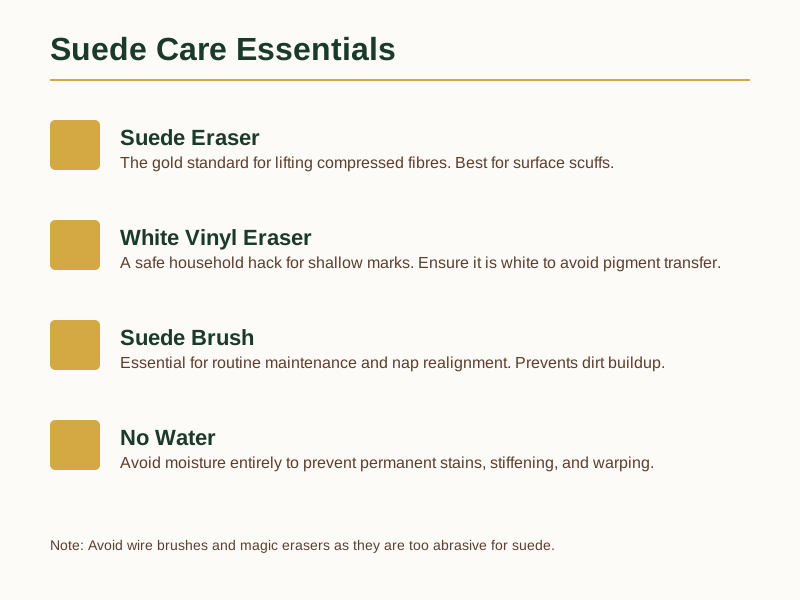
If you want the most effective method for removing scuffs and restoring the nap, a dedicated suede eraser is the tool for the job. It works through physical abrasion—the rubber surface grabs and lifts the flattened fibres, dislodging trapped dirt. It’s the only option designed specifically for this task.
A good suede eraser handles surface-level scuffs and light marks well. The trade-off is that deeper, ingrained marks will still need more work or professional cleaning—an eraser is a maintenance tool, not a miracle cure. Budget alternatives are gentler and cheaper, but better suited to light refreshes than stubborn marks.
If you’re ready to build this into a proper care routine, the Free Suede & Leather Care Checklist covers what to use and when.
The White Vinyl Pencil Eraser Hack
A white vinyl pencil eraser can work for shallow scuffs—the kind you’d get from brushing past a rough surface. The mechanism is straightforward: vinyl is soft enough not to damage the nap, but grippy enough to lift surface grime from compressed fibres. For a mark that’s more grime than crushed nap, this genuinely does the job.
The caveat that matters is this: preferably use a white vinyl eraser. Coloured erasers can contain pigments that might transfer onto the suede. You’d be trading the scuff for a coloured smear, which is a worse problem. Test any eraser on an inconspicuous area first, like the inside heel.
This isn’t a substitute for a dedicated eraser on anything more than a light mark. But if you’ve got a pencil case rather than a cobbler’s kit, it’s worth a go.
Using a suede brush for maintenance: a suede brush works differently to an eraser. Brushing lifts surface debris and realigns the nap, which makes it excellent for routine maintenance—removing loose dirt before it works into the fibres. Think of it as a daily refresh rather than a scuff corrector.
Used on its own, a brush won’t fix a deep scuff. But it’s the right tool for the job after you’ve erased a mark—you brush the area to redistribute the nap evenly. Regular brushing helps maintain the nap, making it easier to clean when a scuff does happen. A clean soft-bristled toothbrush does a reasonable job on lighter suede items, though it won’t match the nap-raising action of a dedicated brush.
Common Mistakes to Avoid
A frequent error is reaching for a wet cloth. People try to scrub a scuff with water and soap, and it spreads the stain and leaves a water mark that is significantly harder to remove than the original scuff. Suede and moisture don’t play well together—the material can stiffen, warp, and develop tide marks as it dries.
Three hard rules:
- No water or soap on suede—not as a cleaner, not as a pre-treatment. If the shoe gets soaked by rain, stuff it with newspaper to help it hold its shape and let it dry naturally, away from any direct heat source. Good Housekeeping guidance is explicit on this point—suede should dry naturally, not near a radiator or with a hairdryer.
- No wire brush—a wire brush will tear the delicate nap rather than lift it.
- No magic eraser on coloured suede—these are too abrasive for most suede and can remove pigment.
A protector spray applied before the first wear is worth the small effort it takes. That’s prevention rather than cure, but it’s the thing most people skip and then regret.
Your Questions Answered
Can I use a regular pencil eraser on suede?
Only a white vinyl eraser, and only on shallow marks. A coloured pencil eraser contains pigment that can transfer onto the suede. A white vinyl eraser works by lifting surface grime from compressed fibres, but it won’t restore deeply flattened nap the way a dedicated suede eraser does.
Will a suede eraser remove all scuff marks?
No. A suede eraser works best on surface-level marks where the nap is compressed rather than permanently damaged. Deep-set stains, dye transfer, or scuffs that have been ignored for weeks may need professional cleaning.
How often should I brush suede shoes?
Ideally after every wear, or at minimum once a week for shoes in regular rotation. Brushing prevents surface dirt from working into the fibres and keeps the nap raised.
When household substitutes aren’t enough: if you’re dealing with a deep grease scuff on pale suede, no household substitute will work effectively. In that scenario, a proper suede eraser or professional cleaning is the only option that won’t risk damaging the material further. The line is clear: if the mark is oily, deeply ingrained, or on a light-coloured shoe, stop experimenting and use the right tool.
For broader guidance on suede care beyond scuff removal, our main resource has the full details: How to Clean Suede Trainers at Home Without Ruining Them .
Sources & Further Reading
- Good Housekeeping — suede care guidance
As an Amazon Associate we earn from qualifying purchases. The products linked above are ones we recommend based on independent research and owner feedback.
Note: General guidance only, verify details with a qualified professional or official source.