Does Storing Trainers in the Box Actually Protect Them, or Make Yellowing Worse?
As an Amazon Associate we earn from qualifying purchases. Some links on this page are affiliate links, which means we may earn a small commission if you make a purchase.
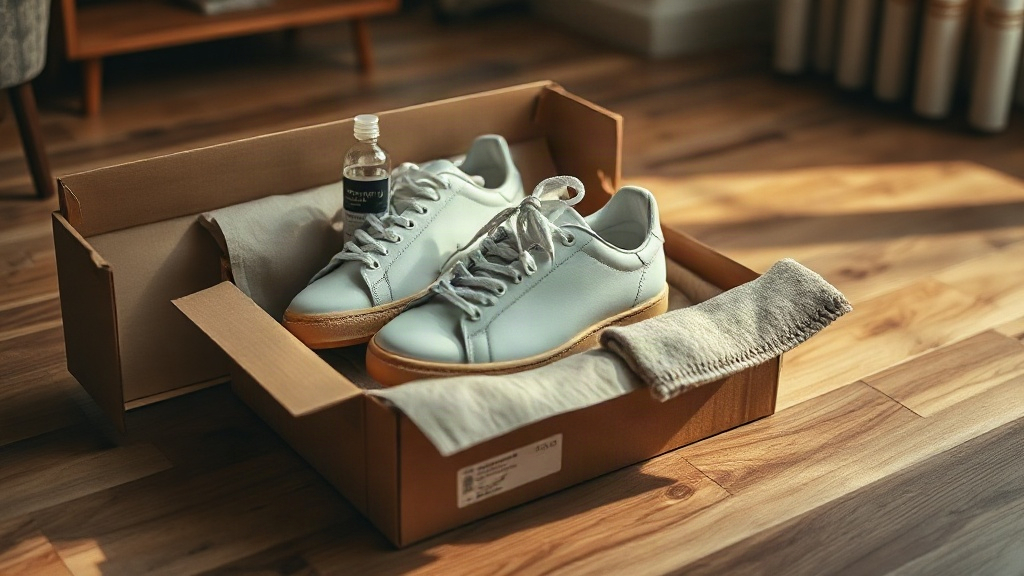
A shoebox serves exactly three functions: it blocks dust, it blocks light, and it traps air. The first two help protect your trainers. The third quietly yellows the soles.
This happens because the enclosed environment a box creates accelerates oxidation—the chemical reaction that turns white rubber and polyurethane midsoles yellow. While storing trainers in their original box feels like the safest option, for long-term colour preservation, it’s often counterproductive.
Understanding Trainer Yellowing
Yellowing isn’t surface dirt; it’s a chemical change in the materials themselves. The rubber and polyurethane used in midsoles react with oxygen over time, a process influenced by environmental factors.
Heat and light are the obvious accelerants—direct sunlight being particularly damaging. But moisture plays a crucial, often overlooked role. Even after trainers feel dry to the touch, residual dampness from wear can linger deep in the foam. When sealed inside a box, this moisture has nowhere to go, creating a humid microclimate that speeds up oxidation.
The adhesive bonding the midsole to the upper also ages independently, often yellowing first and creating a distinct line at the join. While this occurs regardless of storage, poor conditions make it worse.
The Problem with Cardboard Boxes
The instinct to use the original box is understandable—it’s designed to fit, and it feels protective. However, for long-term storage aimed at preventing yellowing, it introduces specific risks.
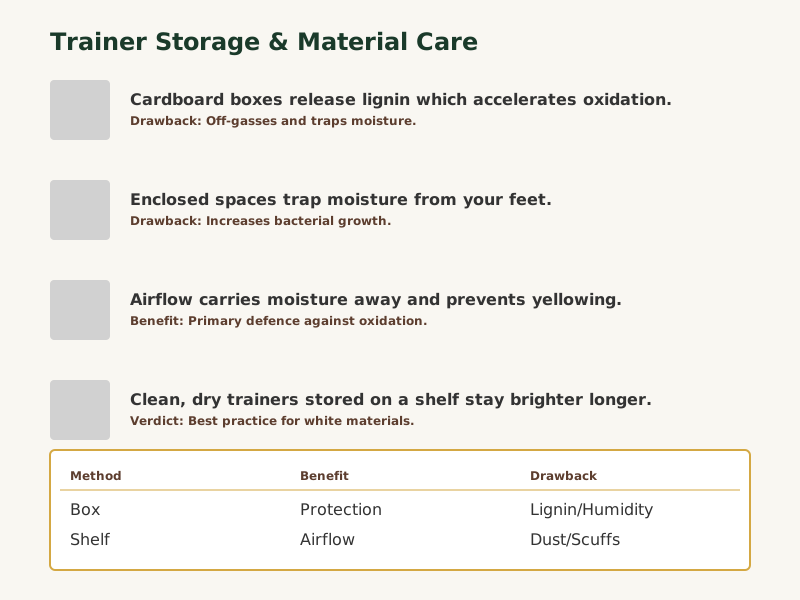
Cardboard can release compounds as it ages, which may settle on shoe materials and potentially contribute to chemical reactions. More significantly, the enclosed space traps any residual moisture from your last wear. This stagnant, humid environment is ideal for accelerating the oxidation you’re trying to avoid.
While boxes excel at physical protection—preventing crushing, scuffs, and deformation from other items—they perform poorly at controlling the atmospheric conditions that cause discolouration. For trainers stored for months, the trade-off often tips negatively.
Effective Open Storage Methods
The alternative is simple: store trainers outside the box in a cool, dry place with good airflow. A cupboard shelf or a ventilated wardrobe allows moisture to dissipate naturally, preventing the build-up that accelerates yellowing.
The critical first step is ensuring trainers are completely clean and dry before storage. After a summer day or a gym session, the outer fabric may feel dry while the midsole foam inside remains damp. Leaving them overnight in a well-ventilated area is a good precaution.
To maintain shape without a box, use shoe trees or stuff the toes with acid-free tissue paper. Cedar shoe trees offer the added benefit of absorbing moisture and neutralising odours, making them a worthwhile investment for leather trainers. For a low-cost option, plain paper works adequately for structure. It’s worth noting that freezing trainers to eliminate odours is not a reliable long-term solution; while it pauses odour-causing bacteria, the smell typically returns after thawing, and repeated freezing and thawing could potentially weaken adhesives. A more reliable approach is using cedar shoe trees to absorb moisture or a dedicated cleaner before storage.
You can find a deeper dive into odour control methods in our guide to stopping trainer smell .
When the Box Still Has a Role
This isn’t a call to bin every shoebox. There are practical scenarios where their protective qualities are valuable.
The primary justification is physical protection during transport or crowded storage. If trainers are going into a moving box, a suitcase, or a stacked cupboard where they might get crushed, the box acts as a essential shield. The key is to only box trainers that are impeccably clean and thoroughly dry first.
Seasonal storage for formal leather shoes can also benefit from a hybrid approach: a cedar shoe tree inside the shoe to manage moisture and maintain shape, with the box placed over the top solely for dust protection. Here, the box isn’t responsible for preventing yellowing—the shoe tree handles that—but it keeps the uppers clean.
The box’s role shifts from primary storage solution to a tool for specific, short-term needs like moving house or organised stacking. For months-long hibernation aimed at keeping soles bright, open storage is superior.
For more on maintaining leather footwear, see our guide to leather shoe and boot care .
Comparing Your Storage Options
| Method | Best For | Main Consideration |
|---|---|---|
| Cardboard Box | Short-term transport, physical protection | Traps moisture; not ideal for long-term colour preservation |
| Open Shelf | Long-term storage, preventing yellowing | Requires a dust-free environment |
| Shoe Tree (Open) | Maintaining shape and managing moisture | Higher initial cost for cedar options |
| Hybrid (Tree + Box) | Seasonal formal shoe storage | Box used only for dust protection, not atmospheric sealing |
Putting It All Together
Reassign the box’s role: it earns its place for moving house and short-term stacking, not for months-long storage. Use it for transport, not hibernation.
For the goal of keeping white trainers bright, open storage in a cool, dry, ventilated space is the more effective strategy. It prevents the humid, stagnant conditions that a sealed box creates.
Once you’ve got the storage sorted, the rest of the care routine follows. If you want a simple checklist that covers cleaning, drying, and storage in one place, we’ve put one together. Grab the Free Suede & Leather Care Checklist for the complete picture.
Further Reading
For a deeper explanation of the yellowing process, see our overview: Why Do White Trainers Turn Yellow? .
As an Amazon Associate we earn from qualifying purchases. The products linked above are ones we recommend based on independent research and owner feedback.
Note: General guidance only, verify details with a qualified professional or official source.