How to Condition a Leather Bag Without Darkening It
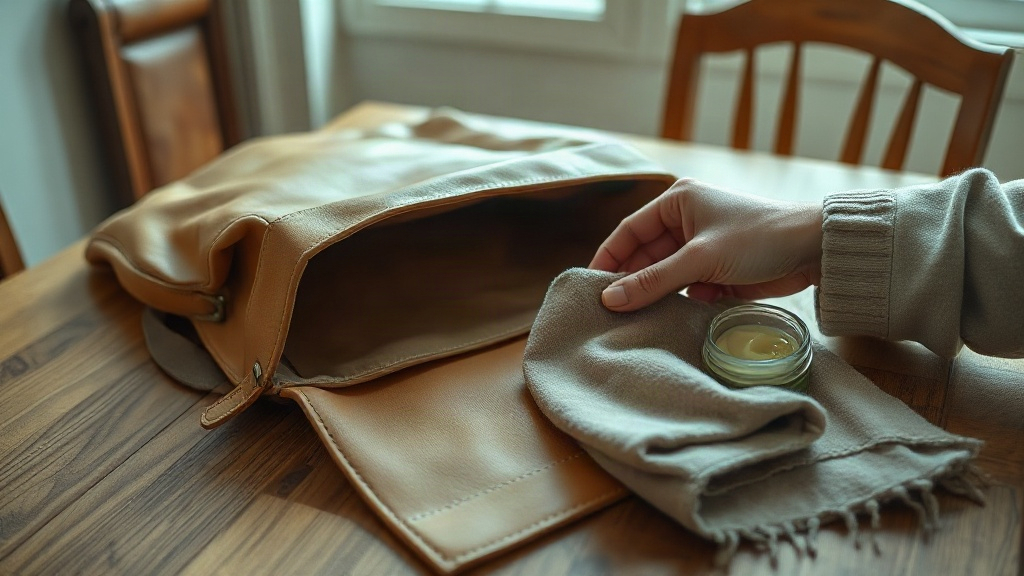
Walk down the leather care aisle and you’ll see conditioners split into two camps: those that will darken your bag and those that won’t. The label wording—’neutral’, ‘colourless’, ’non-darkening’—tells you which is which before you spend anything. Getting this wrong is why many light-coloured bags end up a shade darker after conditioning.
Standard products are often made for boots, where some darkening is acceptable. Applied to a fine leather bag, the same formula can saturate the fibres and alter the colour. The fix is choosing a conditioner designed not to darken and testing it properly.
Here is how to condition your leather bag without changing its colour, and which products actually let you do that.
The Problem with Standard Conditioners
The leather used for bags is typically softer and thinner than that used for footwear. This refined drape comes at a cost: it responds poorly to the heavy oils found in many high-street conditioners. Products containing lanolin, neatsfoot oil, or similar animal-derived fats are formulated to nourish thick, durable leather. On a bag, they saturate the finer fibres, causing a visible darkening effect.
The mechanism is one of saturation. These oils fill the leather’s fibre matrix, temporarily deepening the colour as they are absorbed. While this might add character to a dark brown boot, it creates an uneven, stain-like patch on a light tan or cream bag.
It’s important to distinguish this from natural ageing. Leather will gradually darken with use, developing a patina that adds character. An uneven darkening caused by a single application of the wrong product, however, is the result to avoid. The goal is controlled care, not stopping the natural ageing process.
Over-conditioning is another risk, even with a suitable product. Leather needs to breathe. Applying conditioner too frequently or too generously can leave a greasy residue and eventually compromise the material’s integrity. The guidance for RM Williams boots, for instance, emphasises that conditioning should be measured, not overdone.
The Essential Pre-Conditioning Test
This step is the single most effective way to prevent a costly mistake and is often skipped in general guides.
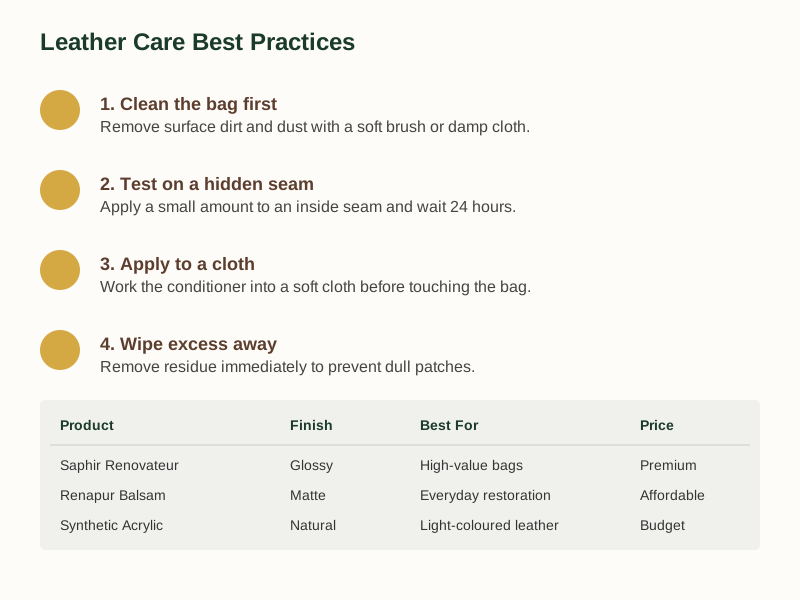
Before applying any product to the main surface of your bag, test it on a hidden area. An inside seam, the underside of a flap, or behind a strap are all ideal spots. Apply a small amount of conditioner, allow it to dry fully for 24 hours, and then check for any colour shift.
This test is only reliable if you’ve chosen an appropriate product from the start. Look for conditioners explicitly described as neutral or colourless. Check the ingredients if possible; avoid those listing lanolin, neatsfoot oil, or beeswax, as these work by saturation. Synthetic, acrylic-based conditioners typically condition without this effect.
The core issue is that a conditioner safe for dark boots can still mark a light bag, because the darkening only becomes visible on pale leather. The hidden seam test catches this before it affects the bag’s appearance.
The process in brief:
- Clean the bag’s surface first.
- Apply the conditioner to a hidden seam.
- Wait a full 24 hours.
- Check for colour change before proceeding to the main surface.
If the test area has darkened, that product is not suitable for your bag.
It is also crucial to note that conditioner is not suitable for suede or nubuck bags, as it will clog and ruin their raised nap. These materials require dry cleaning methods. Furthermore, the frequency of conditioning should be measured; once or twice a year is typically adequate, or whenever the leather feels dry, as over-conditioning can cause the leather to lose its shape.
Reliable Conditioners That Won’t Darken Leather
For this specific need, two products stand out for their consistent performance—one offers a premium finish, the other delivers excellent value.
Saphir Renovator Cream (paid link) provides strong conditioning and adds a noticeable shine to quality leather. Its pigment-free formula is the critical feature for preserving colour on light bags. The main consideration is its premium price point. For high-value bags where a glossy finish is desired, it’s a justifiable investment. For pure conditioning without the shine, the cost is harder to justify.
View Saphir Renovator Cream on Amazon → (paid link)
Renapur Leather Balsam (paid link) has a loyal following in the UK for a reason. With numerous positive reviews from verified buyers, it’s praised for restoring suppleness to dry leather without creating a high-gloss finish or altering colour. It results in a soft, natural-looking matte finish. It’s important to note it is not a waterproofing product. For the core task of conditioning without darkening at an accessible price, it reliably delivers.
See Renapur Leather Balsam on Amazon → (paid link)
In essence: choose Saphir for premium bags where shine is wanted; choose Renapur for dependable, everyday care that maintains the original colour. The finish a conditioner imparts—glossy or matte—will be revealed during your pre-test on a hidden area.
Correct Application Technique
Once you’ve confirmed a product is safe, correct application ensures the best results.
Start with a clean bag. Any surface dirt will be ground into the leather during conditioning. Use a soft brush or a lightly damp cloth to remove dust first.
Apply the conditioner to a soft cloth, not directly onto the bag. A small amount is sufficient. Work it into the cloth, then apply to the leather using small, circular motions, following the grain. Work on one section at a time.
Immediately wipe away any excess conditioner with a clean part of the cloth. Leftover residue can attract dirt and create dull patches.
Allow the bag to dry naturally at room temperature, away from direct heat sources like radiators. Artificial heat can dry the leather too quickly, leading to cracking.
A common pitfall highlighted by experienced owners is applying conditioner to a damp bag, which causes streaking. Always ensure the leather is completely dry before you begin.
Recommended Products at a Glance
| Product | Finish | Best For | Price Point |
|---|---|---|---|
| Saphir Renovator Cream (paid link) | Glossy | High-value bags where shine is desired | Premium |
| Renapur Leather Balsam (paid link) | Matte | Everyday restoration and general care | Affordable |
The Safe Conditioning Protocol
The method for avoiding colour change is straightforward: use a neutral conditioner and always test it on a hidden seam first. This simple precaution separates a successful refresh from an accidental alteration.
For a dry but otherwise sound bag, proper conditioning can restore suppleness and appearance without professional cost. To ensure you apply the right product correctly, follow a clear protocol. Before purchasing any product, dab a tiny amount onto an inconspicuous area like the inside of a strap. Wait a full day. If the colour remains true, the product is safe to use on the visible areas. If it darkens, try a different formula. This test is your safeguard. For a broader routine covering different leather types, see our guide on Leather Bag and Jacket Care .
Related Guides
- How to Clean Suede Trainers at Home Without Ruining Them
- Leather Jacket Gone Stiff or Dry: What Actually Brings It Back
Sources & Further Reading
As an Amazon Associate we earn from qualifying purchases. The products linked above are ones we recommend based on independent research and owner feedback.
This article provides general guidance. Always verify specific care methods with a qualified professional or the manufacturer.