How to Clean Yellowed Trainer Soles Without Bleach
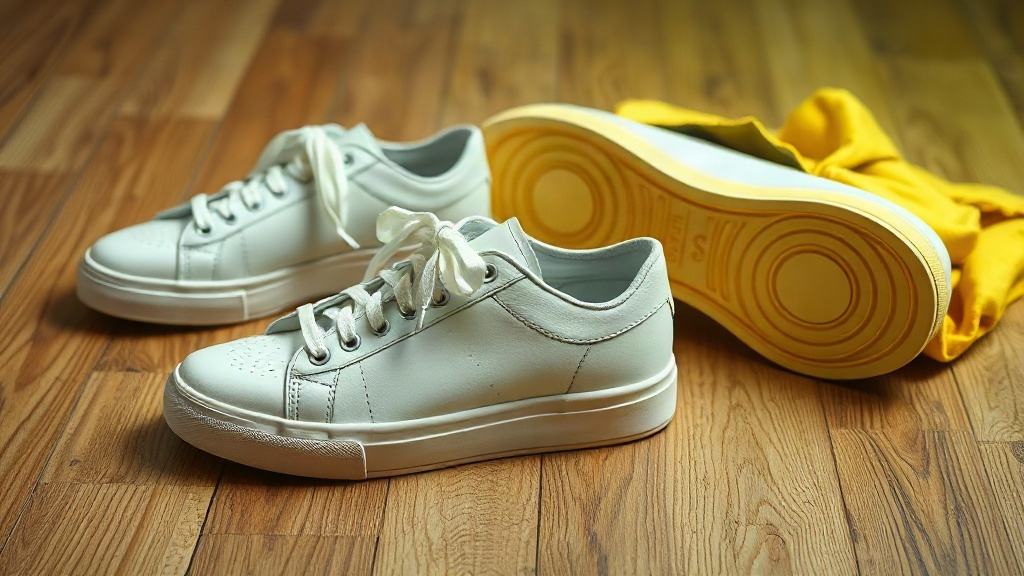
Bleach damages rubber and EVA soles through oxidative degradation—the same chemical process that causes yellowing in the first place, just accelerated. You’re literally speeding up the problem you’re trying to solve.
As an Amazon Associate we earn from qualifying purchases. This page contains affiliate links — if you buy through them, we earn a small commission at no extra cost to you.
You clean your white trainers, leave them looking box-fresh, and find that familiar dull yellow creeping back across the soles a few weeks later. It’s frustrating, and worse—it makes you reach for whatever is under the sink. Don’t. Bleach is a known cause of renewed yellowing on white footwear.
The good news is that yellowed soles aren’t ruined. This article explains what is actually causing the discolouration, walks through a safe four-step method to bring them back, and tells you what commercial cleaners can and can’t do—without selling you either one.
What’s really happening to your soles
The main culprit is oxidation. Many shoes, especially white trainers, use rubber, foam, mesh, synthetic coatings and adhesives that react with oxygen over time. It is the same chemistry as an apple turning brown after you cut it—the material’s chemical structure changes when it meets air, and the yellowing is the result. It happens slowly, which is why it catches you off guard.
Glue is a secondary factor. The adhesives used to bond soles to uppers can discolour on their own, particularly when exposed to warmth or sunlight. Combine that with ordinary dirt and the oils from your feet, and you have a build-up that sits on the surface and then works its way in.
Here is the thing nobody talks about enough: that layer of grime isn’t just cosmetic. Embedded oils and dirt block cleaning and whitening agents from working—you scrub away and the yellow is still there underneath. That trapped layer is why a quick wash often leaves you disappointed.
Bleach gets recommended constantly, but it carries a specific risk that retailers warn about. Residual bleach sitting in the rubber can oxidise further and cause yellowing that looks identical to the original problem.
The safe cleaning method
Most guides stop at “use a sneaker cleaner.” The missing step is degreasing the sole before you apply anything else—oil and dirt block the whitening reaction. Without this step, you are painting over a greasy surface and wondering why it doesn’t work.
Here is the order:
Step 1: Dry brush. Use a soft-bristled brush to remove loose dirt and debris. This prevents scratching and gives the surface a fighting chance before you add any liquids.
Step 2: Degrease. Apply isopropyl alcohol to a microfibre cloth and wipe the sole thoroughly. Isopropyl removes surface oils and contaminants that block everything else from working. This is the step that makes the difference — soles can look clean but still yellow after a standard wash if the degrease step is skipped, because the whitening agent never gets past the film of oils sitting on top.
Step 3: Apply a dedicated cleaner. Use a sneaker cleaner on the yellowed areas — the Crep Protect Sneaker Cleaner Kit (paid link) is a brush, solution and cloth for white shoes, not a waterproofing spray. Work the solution in with the brush using circular motions. Don’t flood the sole.
See Crep Protect Sneaker Cleaner Kit on Amazon → (paid link)
Step 4: Rinse and dry. Wipe away the cleaner with a damp cloth, then leave the trainers to air dry somewhere cool and out of direct sunlight. Never shove them near a radiator—heat accelerates the oxidation that caused the problem in the first place.
For light yellowing, this process is usually enough to bring back a presentable white. For more severe oxidation, you may need to repeat the cycle a couple of times, or accept that deeply discoloured rubber has a ceiling on what you can achieve at home.
Considering commercial cleaners
Dedicated sneaker cleaners are generally safer and more effective than DIY hacks, and they are formulated to work on rubber and synthetic materials without eating into them. The Jason Markk Essential Kit (paid link) is a solid choice for routine cleaning and light yellowing, with minimal effort involved.
Check Jason Markk Essential Kit price → (paid link)
The honest caveat is that they are not miracle products. Owners repeatedly note that these cleaners handle everyday dirt well but struggle with stubborn marks or long-set discolouration. Some products are marketed specifically for yellowed soles, but their effectiveness depends heavily on whether you have done the degreasing step first. Skip that, and you are paying for a branded cleaner to fail.
If you are on a tighter budget, the Reshoevn8r Essential Kit (paid link) is a sneaker and leather cleaner set for routine dirt. It will not reverse oxidation that has already set in the sole.
See Reshoevn8r Essential Kit on Amazon → (paid link)
The one to be careful with is Angelus Easy Cleaner (paid link). It has strong cleaning power, but that strength is exactly the risk — it can cause yellowing and dye stripping on white shoes if left on too long or used undiluted. If you have suede panels or dyed materials on your trainers, do a test patch first or choose a gentler option.
Check Angelus Easy Cleaner price → (paid link)
Prevention beats cleaning
Once you have got the yellow out, keeping it gone is mostly about habit.
Regular cleaning stops dirt from becoming embedded—once it is in, it is significantly harder to shift. Wiping down your soles after a particularly muddy walk, or giving them a quick brush every week or two, makes a meaningful difference. Keeping white trainers in decent shape for years comes down to that little-and-often approach rather than any specific product.
Soft brushes and microfibre cloths are the tools that matter here. Hard bristles and rough cloths can scuff rubber over time, which roughens the surface and makes it easier for dirt to cling—the opposite of what you want.
Storage matters too. Keep trainers in a cool, dry place away from direct sunlight. UV light and heat are both oxidation accelerators, and a shoe left in direct sunlight by a window will yellow faster than one in a darkened cupboard.
If you wear your trainers regularly, a protector spray applied to the uppers after cleaning can help—it won’t stop sole yellowing, but it does reduce the cleaning frequency you will need overall.
Your questions answered
Can I use baking soda and hydrogen peroxide to clean yellowed soles?
This comes up everywhere, and it is a bit of a gamble. Hydrogen peroxide may lighten rubber, but repeated or concentrated use also risks damaging other materials—foam midsoles can become brittle over time. The mixture can be abrasive and inconsistent. A dedicated sneaker cleaner with the degreasing step done first is the more reliable route, especially if you have spent money on the trainers.
Will this method work on all types of trainers?
It is most effective on rubber and synthetic soles. Leather soles need different care—conditioning rather than scrubbing—and the materials respond differently to isopropyl alcohol. If your trainers have mixed materials, stick to gentler products on the leather and suede panels.
How often should I clean my trainers to prevent yellowing?
After a particularly dirty walk or wet conditions, a quick brush and wipe-down after they dry makes a real difference. Prevention is significantly easier than cure with this particular problem.
Understanding the yellowing process
| Cause | Effect | Solution |
|---|---|---|
| Oxidation | Rubber reacts with oxygen over time | Use a dedicated cleaner and degrease first |
| Glue Discolouration | Adhesives darken with heat or sunlight | Clean regularly to prevent build-up |
| Embedded Dirt | Blocks cleaning agents from working | Dry brush and wipe down after muddy walks |
| Heat Exposure | Accelerates oxidation | Store in a cool, dry place away from radiators |
| UV Light | Direct sunlight causes yellowing | Keep trainers in a darkened cupboard when not in use |
Is the yellowing reversible or structural?
Before you invest time in cleaning, rub your thumb firmly across the yellowed area. If the colour lightens briefly under pressure, that’s surface-level discolouration you can fix. If the yellow remains unchanged no matter how hard you press, the rubber itself has oxidised—that’s structural and won’t come out completely. Either way, bleach isn’t the answer.
As an Amazon Associate we earn from qualifying purchases. The products linked above are ones we recommend based on independent research and owner feedback.
Note: General guidance only, verify details with a qualified professional or official source.
For a complete overview, see our Why Do White Trainers Turn Yellow, Even in Storage? .